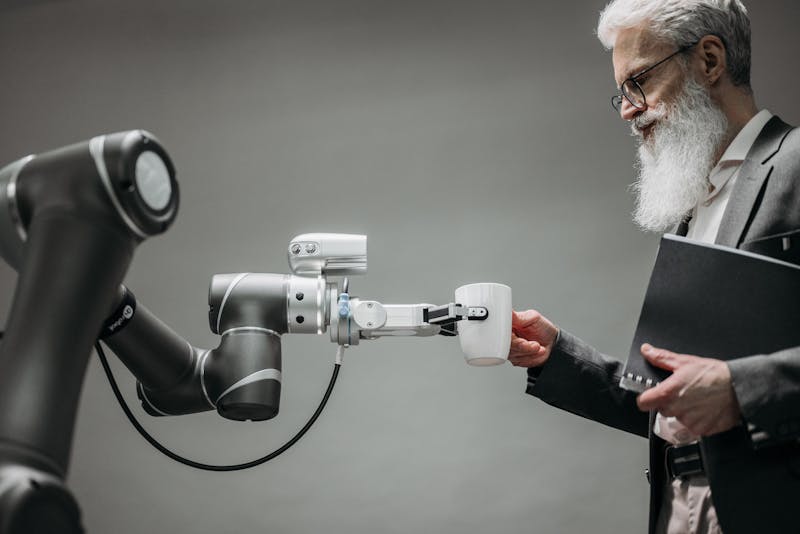
US AI Regulation Reversal: Trump Administration Considers Model Vetting
The Trump administration is considering requiring AI model evaluation before public release, marking a dramatic shift from its previous hands-off approach to AI oversight.
What's Happening with US AI Regulation?
The Trump administration is considering a policy that would require AI models to be vetted before public release. This represents a stark reversal from its earlier "anything goes" approach to AI development.
The White House is forming an AI working group of tech executives and government officials to bring oversight to the rapidly evolving AI landscape.
Why the Sudden Shift?
Several factors are driving this change: growing concerns about AI-generated deepfakes and misinformation, pressure from allies with stricter regulations, and the realization that uncontrolled AI development poses economic and security risks.
The shift has sown confusion in the tech industry, as companies that built strategies around minimal regulation now face potential compliance requirements.
What This Means for AI Developers
If model vetting becomes mandatory, AI companies would need to submit their models for evaluation before release. This could slow down the current breakneck pace of model launches but might also establish quality standards that benefit the entire industry.
The proposed "AMERICA AI Act" introduced in Congress would also preempt state-level AI laws, creating a unified federal framework.
The Compliance Challenge
For startups and independent developers, mandatory vetting could be a significant burden. The key question is whether the government will provide resources to help smaller players comply, or whether the rules will effectively favor large companies with compliance teams.
Common Questions (FAQ)
Q1: When would these regulations take effect? A1: The administration is still in the discussion phase. Any formal regulation would likely take 12-18 months to implement after announcement.
Q2: Would this affect open-source AI models? A2: That's one of the biggest open questions. Open-source models by nature are publicly available, making pre-release vetting challenging to enforce.
Q3: How does this compare to the EU AI Act? A3: The US approach would focus on model-level evaluation, while the EU AI Act takes a risk-based approach to AI applications. Both aim for safety but through different mechanisms.
Stay ahead of the AI curve. Follow @AiForSuccess for daily insights.
📬 Want more AI solopreneur insights?
Subscribe to our weekly newsletter →Related Articles
AI Model API Aggregation Platforms: From Simple Proxies to Enterprise AI Hubs
AI API aggregation platforms are evolving beyond protocol translation. Discover how these platforms are becoming essential infrastructure for enterprise AI adoption.

AI Jobs Explosion: 12x Increase in AI Positions Signals Massive Talent Demand
The AI job market has exploded with a 12x increase in AI positions since 2025. Discover what's driving this talent rush and what it means for your career in artificial intelligence.

Anthropic's Claude Code Source Leak: 1900 Files, 500K Lines of Code Gone Public
In June 2026, Anthropic accidentally published nearly 1,900 source files and 500,000 lines of Claude Code's core codebase. Here's what the leak revealed and why it matters for AI developers.