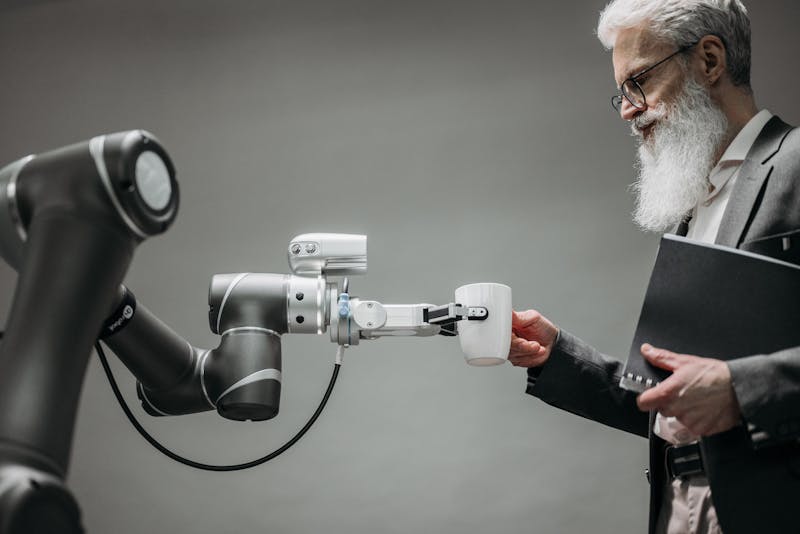
OpenAI Officially Enters Robotics — What It Means for the AI Industry
OpenAI has announced its official entry into the robotics industry, forming an independent team focused on embodied intelligence. Here's why this matters for the future of AI and automation.
OpenAI's Bold Move into Robotics
OpenAI has officially announced its entry into the robotics industry. The company is forming an independent, dedicated team to focus on embodied intelligence — AI systems that can perceive, reason, and act in the physical world.
This is a major strategic pivot for OpenAI, which has primarily been known for its language models like GPT and ChatGPT.
Why Embodied Intelligence Matters
Embodied intelligence represents the next frontier of AI. Unlike chatbots that only process text, embodied AI systems can interact with the physical world through sensors, actuators, and robotic bodies.
The implications are enormous: from manufacturing and logistics to healthcare and household assistance, robots powered by advanced AI could transform every industry.
What This Means for Developers
For developers and AI practitioners, OpenAI's entry signals new opportunities. Expect new APIs, SDKs, and platforms for building robotics applications powered by large language models.
If you're already working with OpenAI's APIs, this expansion could open doors to entirely new categories of applications.
The Competitive Landscape
OpenAI isn't alone in this space. Google DeepMind, Tesla, and several startups are also racing to build intelligent robots. But OpenAI's strength in foundation models gives it a unique advantage.
FAQ
Q: What is embodied intelligence? A: Embodied intelligence refers to AI systems that can interact with and learn from the physical world through a robotic body, combining perception, reasoning, and physical action.
Q: When will OpenAI's robotics products be available? A: OpenAI has just announced the formation of the team. Commercial products are likely still months or years away, but developer tools may come sooner.
Q: How does this affect existing OpenAI users? A: In the short term, there's no change. Long-term, expect new robotics-related APIs and tools to complement existing language model services.
Stay ahead of the AI curve. Follow @AiForSuccess for daily insights.
📬 Want more AI solopreneur insights?
Subscribe to our weekly newsletter →Related Articles
AI Model API Aggregation Platforms: From Simple Proxies to Enterprise AI Hubs
AI API aggregation platforms are evolving beyond protocol translation. Discover how these platforms are becoming essential infrastructure for enterprise AI adoption.

AI Jobs Explosion: 12x Increase in AI Positions Signals Massive Talent Demand
The AI job market has exploded with a 12x increase in AI positions since 2025. Discover what's driving this talent rush and what it means for your career in artificial intelligence.

Anthropic's Claude Code Source Leak: 1900 Files, 500K Lines of Code Gone Public
In June 2026, Anthropic accidentally published nearly 1,900 source files and 500,000 lines of Claude Code's core codebase. Here's what the leak revealed and why it matters for AI developers.