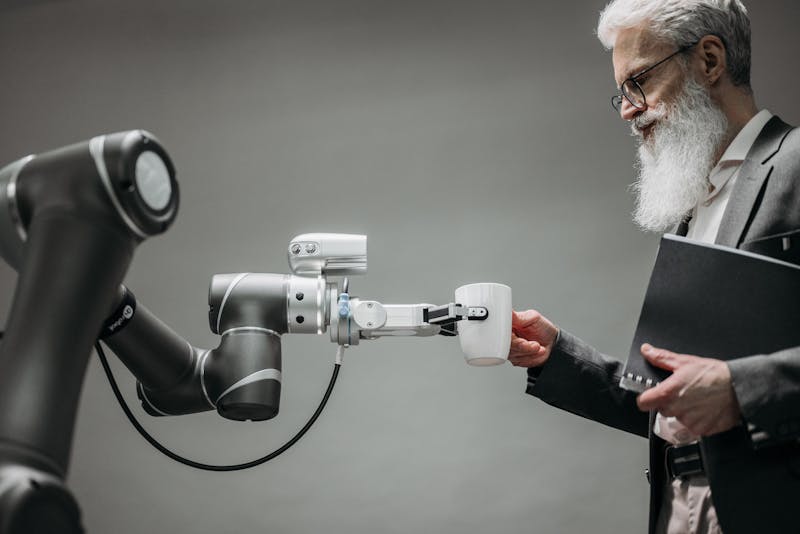
Human Scientists Still Outperform AI on Complex Research Tasks — For Now
A Nature study finds human scientists significantly outperform the best AI agents on complex scientific tasks, revealing the current limits of AI in real research settings.
What Did the Nature Study Find?
A landmark study published in Nature found that human scientists significantly outperformed the best AI agents when tackling complex, open-ended research tasks. While AI excels at pattern recognition and data processing, the study revealed a clear gap in creative hypothesis generation and multi-step experimental design.
Where Do AI Agents Excel vs. Struggle?
AI agents performed well on structured tasks with clear parameters — data analysis, literature review, and pattern identification. However, they struggled with tasks requiring intuition, cross-domain reasoning, and the kind of creative leaps that drive scientific breakthroughs.
Why Does This Matter?
As organizations rush to deploy AI agents for research and analysis, this study provides a reality check. AI is a powerful tool for augmenting human researchers, but replacing them for complex scientific work remains beyond current capabilities. The best results come from human-AI collaboration.
What Does This Mean for AI Development?
The findings highlight the need for better world models, continual learning, and hierarchical reasoning — exactly the areas where leaders like DeepMind are focusing. The gap is closing, but science's creative core remains distinctly human.
Common Questions (FAQ)
Q1: Which AI agents were tested in the study? A1: The study tested leading AI agents against human scientists on identical research tasks, evaluating hypothesis quality, experimental design, and result interpretation.
Q2: Will AI eventually match human scientists? A2: Most researchers believe it's a matter of time, but the timeline depends on breakthroughs in reasoning, world models, and continual learning — not just scaling.
Q3: How should research teams use AI today? A3: Use AI for data processing, literature synthesis, and routine analysis. Let humans drive hypothesis generation and creative experimental design for the best results.
Stay ahead of the AI curve. Follow @AiForSuccess for daily insights.
📬 Want more AI solopreneur insights?
Subscribe to our weekly newsletter →Related Articles
AI Model API Aggregation Platforms: From Simple Proxies to Enterprise AI Hubs
AI API aggregation platforms are evolving beyond protocol translation. Discover how these platforms are becoming essential infrastructure for enterprise AI adoption.

AI Jobs Explosion: 12x Increase in AI Positions Signals Massive Talent Demand
The AI job market has exploded with a 12x increase in AI positions since 2025. Discover what's driving this talent rush and what it means for your career in artificial intelligence.

Anthropic's Claude Code Source Leak: 1900 Files, 500K Lines of Code Gone Public
In June 2026, Anthropic accidentally published nearly 1,900 source files and 500,000 lines of Claude Code's core codebase. Here's what the leak revealed and why it matters for AI developers.