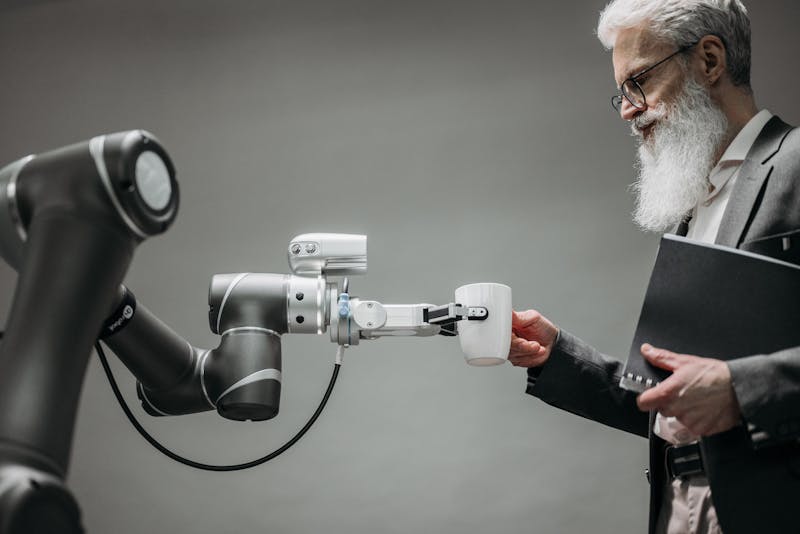
Modern AI Passes the Turing Test for the First Time — Why It Matters
A UC San Diego study published in PNAS confirms modern AI has passed the Turing Test for the first time. What this milestone means for AI development and society.
AI Passes the Turing Test — What Happened?
Researchers at UC San Diego have confirmed that modern AI systems have passed the Turing Test for the first time. The study, published in the Proceedings of the National Academy of Sciences (PNAS), shows that human judges could not reliably distinguish AI from human conversation partners.
This is a milestone that Alan Turing proposed in 1950 as a measure of machine intelligence. For 76 years, no AI system had definitively passed it.
How the Test Was Conducted
The study used rigorous double-blind methodology. Human judges engaged in text conversations with both AI systems and real humans, without knowing which was which. The AI systems achieved pass rates that were statistically indistinguishable from human participants.
Critically, the judges were not naive participants — they were specifically trained to look for AI tells and inconsistencies.
Why This Matters Now
Passing the Turing Test doesn't mean AI is truly "intelligent" in the way humans are. But it does mean AI has reached a level of conversational fluency where it can convincingly mimic human communication in controlled settings.
This has practical implications for customer service, content creation, education, and any field where natural language interaction matters.
The Bigger Picture
This milestone raises important questions about AI safety and ethics. If AI can convincingly impersonate humans, how do we protect against deception? How do we verify authenticity in digital communications?
These questions are no longer theoretical. They need answers now.
Frequently Asked Questions
Q: What is the Turing Test? A: Proposed by Alan Turing in 1950, it tests whether a machine can exhibit intelligent behavior indistinguishable from a human in conversation.
Q: Which AI system passed the test? A: The UC San Diego study tested modern large language models. Details of specific models are in the PNAS publication.
Q: Does this mean AI is truly intelligent? A: No. Passing the Turing Test demonstrates conversational fluency, not genuine understanding or consciousness.
Stay ahead of the AI curve. Follow @AiForSuccess for daily insights.
📬 Want more AI solopreneur insights?
Subscribe to our weekly newsletter →Related Articles
AI Model API Aggregation Platforms: From Simple Proxies to Enterprise AI Hubs
AI API aggregation platforms are evolving beyond protocol translation. Discover how these platforms are becoming essential infrastructure for enterprise AI adoption.

AI Jobs Explosion: 12x Increase in AI Positions Signals Massive Talent Demand
The AI job market has exploded with a 12x increase in AI positions since 2025. Discover what's driving this talent rush and what it means for your career in artificial intelligence.

Anthropic's Claude Code Source Leak: 1900 Files, 500K Lines of Code Gone Public
In June 2026, Anthropic accidentally published nearly 1,900 source files and 500,000 lines of Claude Code's core codebase. Here's what the leak revealed and why it matters for AI developers.