Stanford AI Index 2026: 12 Takeaways That Reveal AI's Real Trajectory
The 2026 Stanford AI Index Report reveals breakthroughs in science and reasoning, concerning energy consumption, and America's dominance in AI spending. Here are the key takeaways.
What Is the Stanford AI Index?
The Stanford AI Index is the most comprehensive annual report tracking AI progress worldwide. The 2026 edition covers model performance, economic impact, policy developments, and societal implications of artificial intelligence.
This year's report shows AI models achieving breakthrough results in science and complex reasoning, but at a concerning environmental cost.
Key Finding: Energy Consumption Is Alarming
AI is now consuming over 10% of U.S. electricity, and demand is only accelerating. The report highlights a critical tension between AI's growing capabilities and its environmental sustainability.
A separate breakthrough in April 2026 showed that AI energy use can be cut by 100x while boosting accuracy — but widespread adoption of such efficiency measures remains uncertain.
Key Finding: The Talent War Intensifies
America continues to outspend every other country on AI research and development. However, the report finds that the U.S. is finding it harder to attract top international talent, partly due to immigration policy uncertainty.
Countries like China, the UK, and France are aggressively building their own AI talent pipelines, narrowing the gap with the U.S.
Key Finding: Humans Still Beat AI on Complex Tasks
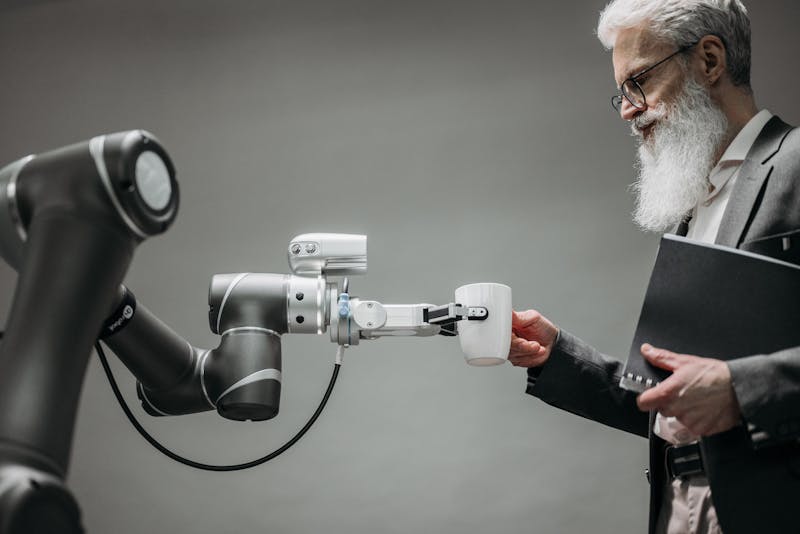
A notable Nature study covered in the report found that human scientists significantly outperform the best AI agents on complex research tasks. Despite AI's impressive benchmark scores, real-world scientific reasoning remains a human strength.
This finding tempers the hype around AI replacing researchers and suggests that human-AI collaboration is the more realistic near-term path.
Common Questions (FAQ)
Q1: Is AI really using 10% of U.S. electricity? A1: Yes, according to the Stanford AI Index 2026, AI-related energy consumption has exceeded 10% of total U.S. electricity usage and continues to grow.
Q2: Which country leads in AI spending? A2: The United States leads by a wide margin in AI investment, though attracting top talent has become more challenging.
Q3: Can AI replace scientists yet? A3: The report shows humans still significantly outperform AI on complex scientific tasks, though AI excels at specific narrow applications like protein folding and data analysis.
Stay ahead of the AI curve. Follow @AiForSuccess for daily insights.
📬 Want more AI solopreneur insights?
Subscribe to our weekly newsletter →Related Articles
AI Startups Absorbed $242 Billion in Q1 2026 — a Record 81% of All VC Funding
Global AI startup funding hit a record $297 billion in Q1 2026, with AI companies capturing $242 billion or 81% of all venture capital deployed worldwide.

Claude Design: Anthropic's Bold Move Into AI Prototyping
Anthropic launches Claude Design, a tool that turns text prompts into prototypes, visual assets, and handoff-ready outputs for designers and developers.

Claude Opus 4.7: Anthropic's Most Capable Model Yet
Anthropic releases Claude Opus 4.7 with stronger coding, higher-resolution image support, and new cybersecurity safeguards at unchanged pricing.