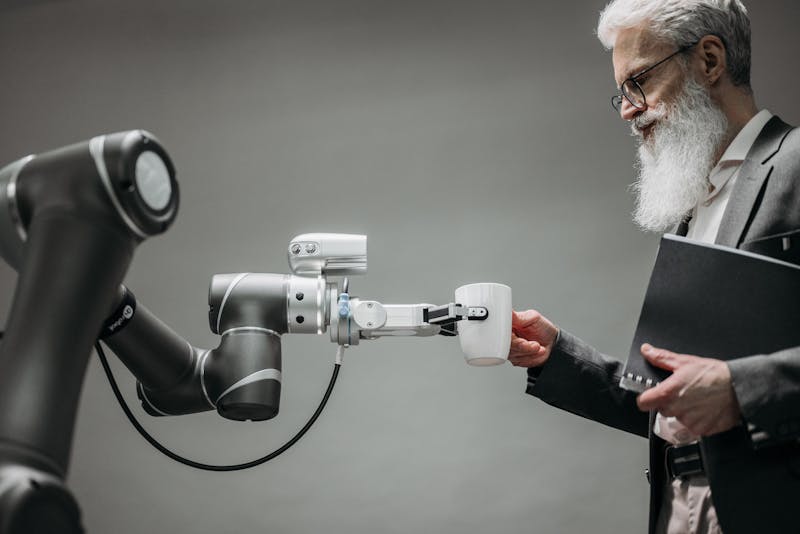
SoftBank Launches 'Physical AI' Company to Build Autonomous Robots by 2030
SoftBank is creating a new company dedicated to physical AI — autonomous machines and robots powered by AI models, backed by Sony, Honda, and Nippon Steel.
What Is SoftBank's Physical AI Initiative?
SoftBank is creating a brand-new company focused entirely on "physical AI" — AI models designed to autonomously control machines and robots in the real world. The project aims to deliver working autonomous robotic systems by 2030, marking one of the most ambitious AI-hardware partnerships to date.
The initiative has already secured buy-in from Japanese industry giants including Sony, Honda, and Nippon Steel, signaling serious industrial backing.
Why Does Physical AI Matter Now?
Physical AI represents the next frontier beyond software-based AI. While large language models excel at text and image tasks, controlling physical machines in unpredictable environments requires an entirely different approach to intelligence.
Countries are increasingly investing in sovereign AI efforts to compete with US and Chinese firms. SoftBank's move is part of a broader robotics push that positions Japan as a key player in the global race to bring AI into the physical world.
How Could This Change Industries?
Autonomous robots powered by physical AI could transform manufacturing, logistics, construction, and healthcare. Imagine robots that can adapt to unexpected situations on a factory floor or perform complex assembly tasks without human intervention.
For solopreneurs and small businesses, this could eventually mean affordable robotic assistance for physical tasks — from warehouse operations to customer service in physical retail spaces.
What Are the Challenges?
Building AI that reliably controls machines in the real world is significantly harder than software AI. Robots must handle unpredictable environments, safety concerns, and real-time decision-making at speeds that matter.
The 2030 timeline is ambitious, but the coalition of major Japanese companies gives the project significant resources and expertise to draw from.
FAQ
Q: What is "physical AI"? A: Physical AI refers to AI models designed to control physical machines and robots in real-world environments, as opposed to software-only AI that processes text, images, or data.
Q: Which companies are involved in SoftBank's physical AI project? A: Sony, Honda, and Nippon Steel are among the key partners backing the initiative, along with SoftBank's own robotics division.
Q: When will we see results? A: SoftBank targets 2030 for delivering autonomous robotic systems powered by physical AI models.
Q: How does this relate to sovereign AI? A: The project is part of a growing trend of countries investing in domestic AI capabilities to compete with US and Chinese tech giants.
Stay ahead of the AI curve. Follow @AiForSuccess for daily insights.
📬 Want more AI solopreneur insights?
Subscribe to our weekly newsletter →Related Articles
AI Startups Absorbed $242 Billion in Q1 2026 — a Record 81% of All VC Funding
Global AI startup funding hit a record $297 billion in Q1 2026, with AI companies capturing $242 billion or 81% of all venture capital deployed worldwide.

Claude Design: Anthropic's Bold Move Into AI Prototyping
Anthropic launches Claude Design, a tool that turns text prompts into prototypes, visual assets, and handoff-ready outputs for designers and developers.

Claude Opus 4.7: Anthropic's Most Capable Model Yet
Anthropic releases Claude Opus 4.7 with stronger coding, higher-resolution image support, and new cybersecurity safeguards at unchanged pricing.